
As cyber threats intensify and business downtime becomes increasingly costly, enterprises are rethinking how their data protection strategies fit into their cyber resilience planning. Under Safe Harbor (Cyber Recovery) principles, the focus has shifted toward one core question: can critical data still be trusted and restored when everything else fails?
Backups are no longer just about storing copies of your data. It’s about ensuring those copies remain intact, verifiable, and recoverable fast enough to sustain operations.
Tape once played a critical role thanks to its low cost and offline nature. But as data volumes grow and recovery expectations rise, its limitations in availability and restore speeds have become hard to ignore. It’s time for enterprises to reconsider whether tapes still belong in a modern protection architecture.
Tape still matters — but it shouldn’t be the first line of recovery
With more than seven decades of history, tape backups remain widely used today, largely due to its ability to store large volumes of data at a relatively low cost. When removed from tape drives, it also becomes physically offline and effectively immutable, providing a basic layer of protection against cyber threats.
However, as cyber threats grow more sophisticated, immutability and offline storage alone are no longer enough. Under Safe Harbor principles, cyber resilience also depends on whether data remains survivable and accessible during a major incident.
It is not enough that data merely exists. It must remain clean, intact, and usable. This is where tape backups present a challenge. Verifying tape backups is time-consuming and resource-intensive as it typically requires reloading media and performing full read-through checks. Thus, verification often happens less frequently than planned. This leaves recoverability uncertain until it is necessary.
Data accessibility means restoring operations quickly after disruptions. This is where tape presents another major challenge. Because tape recovery uses sequential reads, the system must scan through large portions of data before reaching the required recovery point. In practice, restoring 1 TB of data from tape can take around an hour, while multi-terabyte restores may take several hours or even days. As a result, it’s difficult to meet today’s RTO (Recovery Time Objective) expectations, where mission-critical services are often expected to resume within minutes— usually in 15 minutes or less. This is exactly why Toyota chose to move away from tape. Click here to read the full story.
In short, while tape offers offline protection, it does not fully satisfy the Safe Harbor principles of ensuring data is both survival and quickly accessible. Given its cost efficiency and capacity advantages, tape is better suited for long-term retention and archival purposes, rather than serving as the frontline for recovery.
>> Further reading: Tape as a long-term retention
In today’s highly digitized enterprises, service availability directly impacts both revenue and business continuity. Any delay in recovery can translate into tangible business losses. This reality underscores why primary backup platforms must deliver fast access, continuous backup verification, and simplified management—capabilities essential for enabling timely recovery when data loss incidents occur.
ActiveProtect: Designed to meet modern cyber resilience requirements
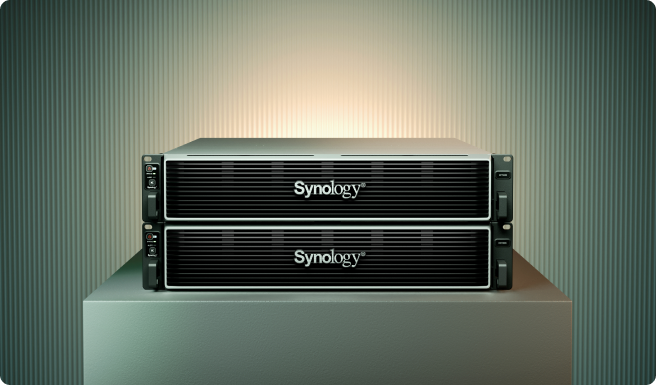
This is why Synology introduced ActiveProtect, a purpose-built backup appliance that is a tangible solution that aligns with the Safe Harbor framework to ensure quick and clean data recovery when needed.
| Safe Harbor framework | How ActiveProtect meets these requirements |
| Immutable | WORM and self-healing ensure backup data cannot be altered or deleted, while automatically detecting and corrupting data to ensure clean restores. |
| Air-gapped backups (offline backups) | Secure isolated backups in an isolated recovery environment automatically; transfers are only allowed during predefined windows. |
| Survivable | Verify your backups and test your restores in an isolated sandbox to confirm they are recoverable. |
| Accessible | Snapshot-like replication with CBT creates independent, restore-ready backups for fast recovery. |
| Decentralized | Deploy separate appliances at each location. |
| Owned by Participant | Ensure full data ownership, recovery operations, and access rights via user-owned infrastructure. |
Built-in data integrity safeguards
To address risks commonly associated with tape—such as environmental degradation and aging—ActiveProtect incorporates an built-in self-healing mechanism. Using Btrfs checksum verification, the system continuously validates the integrity of every backup block. If corruption is detected, data is automatically repaired via RAID-based redundancy which ensures that backups remain accurate. In addition, ActiveProtect provides native immutability with WORM (Write Once, Read Many) technology. Once locked, backup data cannot be altered or deleted during the defined retention period. This ensures that recovery points remain clean, trustworthy, and resilient against ransomware.
>> Learn more about ActiveProtect’s WORM protection.
Isolated recovery environment
Unlike tape-based air-gapped backups that depend on manually removing media and transporting it off-site, ActiveProtect creates an isolated recovery environment automatically. Backup copies are logically and physically isolated from production environments, with data transfers allowed only during user-defined windows and remains fully isolated at all other times. This automation ensures clean, offline-isolated recovery points without the complexity and risk of manual processes.
>> Click here to learn more about creating isolated recovery environments with ActiveProtect
Automated backup verification
ActiveProtect also modernizes backup verification. With automated backup verification enabled, the system launches restored backups in an isolated sandbox environment after each backup.The process is recorded and a video is generated as proof of successful restoration. Unlike tape, which requires manual checks, enterprises gain continuous, audit-grade assurance that backups can be successfully restored—without added operational burden.
High-speed, reliable recovery by design
When incidents occur, recovery speed becomes critical. Built on a disk-based architecture, ActiveProtect can immediately locate and restore the required recovery point, eliminating the delays associated with locating physical media and performing sequential tape reads.
Additionally, ActiveProtect employs a modern backup architecture that combines snapshot-like replication with Changed Block Tracking (CBT). Each backup version is created as an independent, fully recoverable image. During restoration, there is no need to reconstruct data from long incremental chains—administrators simply select the desired version and restore it directly. This design significantly improves recovery reliability while dramatically reducing RTO.
>> Check here to learn more about ActiveProtect’s backup architecture.
In essence, ActiveProtect’s WORM, automated verification, isolation techniques, and instant recovery directly address the core frameworks of cyber resilence within the Safe Harbor framework: immutable, offline, survivable and accessible. By establishing a recovery ready architecture, ActiveProtect ensures that enterprises can restore critical operations with minimal downtime, regardless of any threats.
>> Learn more about ActiveProtect or consult with our team.