
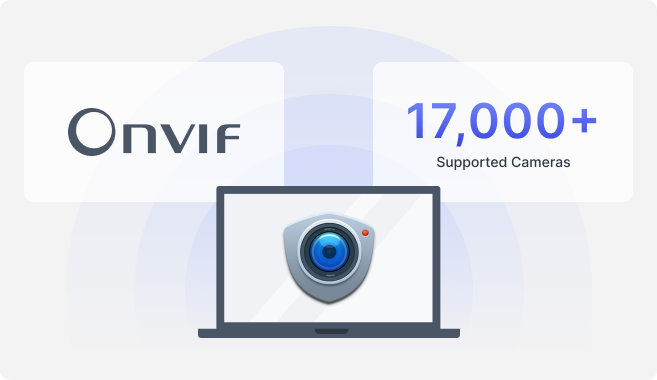
Josh Lin, Director of Video Surveillance solutions at Synology, explains how Surveillance Station 9.2.5 marks a major milestone, with a significant jump from 8,900 to more than 17,000 supported cameras.
Video surveillance systems rarely start from a blank page. Today, most organizations already have cameras deployed to protect workplaces, retail locations, warehouses. As they scale, additional compliance and security requirements follow. That’s often when the limits of traditional, rigid video surveillance architectures show up, especially when it’s time to expand, modernize, or merge data across multiple sites.
Camera Compatibility
Yes, we make cameras too. Synology cameras are designed to work best with Surveillance Station, offering fast deployment and enhanced security compared with generic options. But we also know that many real-world deployments require choice.
Large venues, transport hubs, manufacturing plants, and city infrastructure often depend on specialized hardware: extended optical zoom for stadiums, thermal imaging for perimeters and critical infrastructure, or rugged housings built for hazardous or extreme weather conditions are just a few examples. On top of that, many organizations already have significant sunk costs in their camera fleets. Not just in the devices themselves, but in the cabling, mounting hardware, and the time it took to align and commission each unit.
Ripping out hundreds or thousands of cameras just to follow an NVR/VMS upgrade is disruptive and expensive. But why should that limit your security capabilities?
Surveillance Station takes a different approach. With comprehensive support for more than 17,000 third-party and ONVIF-compatible camera models, it becomes much easier to keep your existing hardware while modernizing the platform behind it.
Drop-in Replacement
For many recent customers, compatibility was the deciding factor in choosing Synology.
At large venues such as Porsche Arena in Stuttgart, upgrading to a modern VMS was essential as they expanded security coverage. What they needed was centralized management, reliable recording, and streamlined monitoring without sending crews back up ladders to replace over a hundred cameras.
Because Surveillance Station supports their existing AXIS cameras, they were able to modernize the backend while leaving the infrastructure on walls and ceilings intact.
A similar pattern appears in transportation environments such as JR Maihama Station, often referred to as “Disneyland Station.” Cameras across the concourse were already strategically placed to monitor passenger flow and safety. However, an aging VMS couldn’t provide the modern analytics and integrations needed to better understand traffic patterns or automatically detect trespassing and other incidents.
By adopting Surveillance Station, organizations like these gain a drop-in replacement for their VMS layer—one that preserves prior investments in cameras while opening the door to new capabilities.
Beyond Cameras
Doubling the number of supported camera models is impressive on paper, but the real value shows up in day-to-day planning for IT and security teams.
When you’re migrating from another VMS or standardizing on a single platform across multiple sites, the main questions are simple:
-
Are our existing cameras on the compatibility list?
-
If we standardize on a vendor or series for new sites, will those devices be supported long term?
With support for over 17,000 models and close collaboration with major vendors such as AXIS, Bosch, and Hanhwa, it’s much easier to answer “yes” to both. That reduces project risk, shortens testing cycles, and minimizes surprises during rollout.
This breadth also gives integrators freedom to choose the right device for each job. From multi-lens cameras, to thermal cameras on perimeter fences, to fisheye and 360° models for large indoor spaces, all while keeping a single, consistent VMS backend with Surveillance Station, even across multiple buildings.
On top of that, many supported cameras now ship with built-in analytics, such as people and vehicle detection or intrusion alerts. Surveillance Station’s open design, official APIs, and integrations with camera analytics and fully external AI platforms enable:
-
Centralized alerts and event handling
-
Unified recording and retention policies
-
Combined third-party AI analytics (for example, adding PPE detection via third-party platforms)
-
Two-way interaction where supported (for example, triggering devices or responding to events)
In practice, that means organizations can combine their preferred camera vendors and analytics engines with Synology’s strengths in storage, reliability, and multi-site management without locking themselves into a single hardware stack.
Discover more
-
Learn more about our third-party integrations and supported cameras on the compatibility list.
-
Explore how Surveillance Station can help modernize your video surveillance and increase your organization’s security posture, without replacing your existing cameras.