

When MSPs evaluate a backup solution, the starting price rarely tells the whole story. The pricing model determines how much MSPs will pay over the next few years. Some pricing models reduce upfront hardware costs but shift spending into ongoing service fees. Others charge per protected workload, so costs grow with the customer.
These differences directly shape MSP profit margins in the future. Below, we break down the most common pricing mechanisms — and the hidden traps behind each one.
Common Backup Vendor Pricing Models
1. Per-workload / per-account subscriptions: Users are charged based on the number of workloads under protection e.g., VMs, endpoints, or SaaS accounts. These are easy to start with as costs initially scale with usage. The downside is that growth itself becomes a cost driver: as MSPs gain more customers or existing customers add more protected workloads, licensing expenses increase alongside them. Even idle accounts often count toward that total, click here to learn more.
On top of that, this model is often marketed with “unlimited storage,” making it seem as if data volume won’t affect costs. In practice, it’s frequently still governed by a fair use policy — for example, a single or aggregate storage allowance tied to paid seats. Exceed it and you need to buy more licenses.
⚠️ Trap: As an MSP scales, licensing costs scale with it—and even “unlimited” or included storage may come with conditions that further compress margins.
2. Monthly service subscription: Some backup vendors offer hardware at a steep discount, or even free, bundled with a monthly service subscription. At first glance, that looks like a great deal: little to no hardware cost upfront. But it actually shifts the cost from a one-time hardware purchase to a recurring service subscription, often tied to a long-term contract that can result in higher total fees over time.
⚠️ Trap: Lower upfront hardware costs can mask higher recurring expenses, turning upfront savings into a higher long-term TCO.
3. Add-on feature pricing: Vendors often keep entry prices low by placing advanced features such as immutable backups, malware scanning, disaster recovery, and more in a higher tier or paid add-on. As soon as a customer asks for enhanced cyber-resilience services or actually needs to perform disaster recovery, you often end up paying a steep price — and part of the upsell revenue you expected goes back to the vendor.
⚠️ Trap: A low base price often hides essential resilience features behind a paid upgrade.
ActiveProtect: Pricing Built for MSP Margins
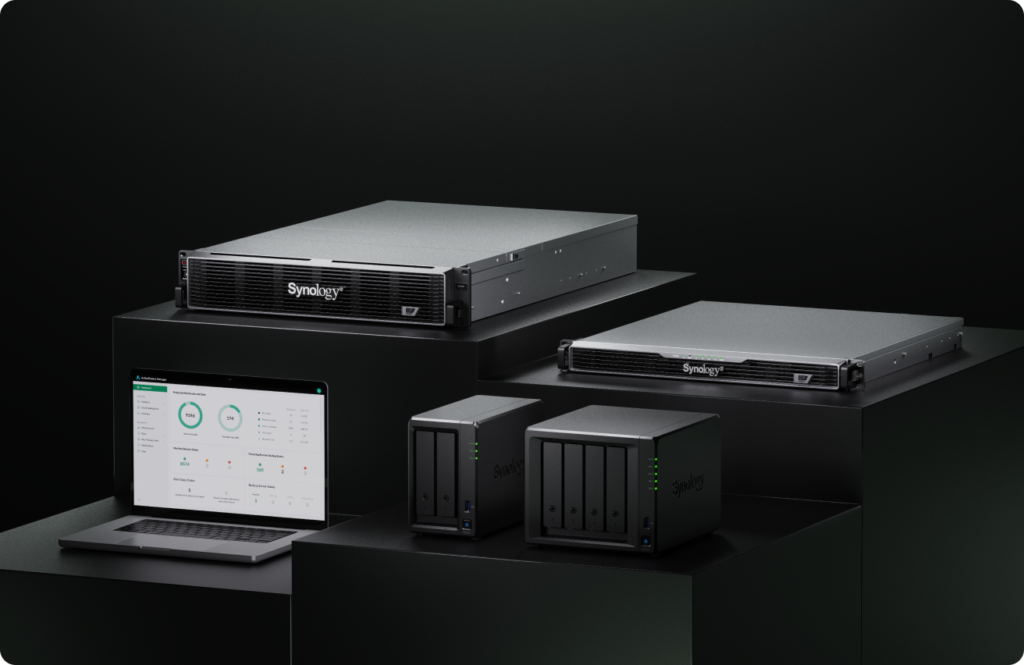
Synology ActiveProtect is an all-in-one backup solution that integrates backup software and storage to protect physical devices, VMs, IaaS, SaaS, file servers, and databases from a single platform. Beyond simplifying protection across diverse customer environments, its straightforward cost structure is designed to reduce long-term TCO and leave MSPs with more room to offer profitable services.
Predictable appliance-based pricing
ActiveProtect uses appliance-based pricing: pay once, and you own both the software and the storage — everything is included. With this pricing structure, MSPs have more freedom to price backup services based on their business model. Whether they charge per device, per TB, per customer, or as part of a bundled managed service, MSPs can set prices based on the value they deliver instead of simply passing through the vendor’s licensing unit.
The difference becomes significant over time. ActiveProtect can reduce TCO by roughly 5–7x compared to hardware-plus-subscription models, and compared to per-workload licensing, the savings can reach roughly 4–6x.
*Estimates are based on publicly available pricing. Actual TCO will vary depending on workload volume, hardware configuration, storage requirements, contract terms, and pricing.
Grow without new licensing costs
As long as the existing appliance has capacity to spare, MSPs can keep onboarding new customers and add workloads without triggering new licensing costs. MSPs can make use of existing infrastructure and only invest further once actual capacity runs out, making costs far easier to forecast.
ActiveProtect includes multiple storage optimization mechanisms —deduplication, tiering, and more — so MSPs can maximize the storage they already have.
Turn built-in capabilities into higher-value services
ActiveProtect includes advanced capabilities such as immutable protection, backup verification, and more, without requiring MSPs to purchase each capability as a separate add-on feature.
That means MSPs can build tiered BaaS/DRaaS offerings on top of the same infrastructure. When customers are willing to pay more for comprehensive cyber resilience services, MSPs don’t have to pay additional licensing fees to unlock those features. This allows MSPs to turn revenue from service upgrades directly into higher margins.
Further reading: 3 overlooked BaaS & DRaaS features MSPs can monetize—without additional costs
Conclusion
Licensing complexity shouldn’t stand between MSPs and healthy margins. With ActiveProtect’s transparent, appliance-based pricing, MSPs can grow their customer base and their service offerings without watching their vendor bill grow right alongside them. Turn scale into profit, not just more overhead.
Licensing isn’t the only thing eating into your margins — see the 5 hidden profit killers in your MSP backup business